

Sleep disorders are a major problem. People sleep little and, more importantly, they sleep poorly. A quarter of French people complain of not getting enough sleep, especially on workdays, and a third report suffering from sleep disorders(1).
Waking up at 3 a.m. usually occurs at the end of a deep sleep cycle, just as the body begins its transition to lighter sleep. At this hour, several biological mechanisms synchronize: a slight rise in cortisol, a drop in body temperature, and possible hypoglycemia if dinner was eaten too early or lacked slow-release carbohydrates. This combination makes the brain more sensitive to wake-up signals, whether internal (thoughts, stress) or external (noise, room temperature).
Learn all about nighttime awakenings: their causes, what they mean, how to avoid them, and how to fall back asleep!
Insomnia and Nighttime Awakening
Generally speaking, insomnia is defined as a lack of sleep in terms of both quality and quantity, even when all external conditions are conducive to sleep (no noise, no bright light, appropriate temperature, etc.).
It is characterized by:
- difficulty falling asleep: after going to bed, even when very tired, one has trouble falling asleep;
- nighttime awakenings: after falling asleep more or less quickly, one wakes up in the middle of the night and is unable to fall back asleep quickly;
- waking up too early: going to bed and sleeping through the night proceed normally, but you wake up very early, around 4:30–5:00 a.m.;
- a feeling of not having rested enough;
- nocturnal restlessness: disturbing dreams or nightmares, night sweats, sleepwalking, etc.
The long-term health impact is far from negligible: chronic pain, high blood pressure, diabetes, a weakened immune system, increased risk of stroke, obesity, depression(2, 3)…
Falling asleep and staying asleep depend on a delicate balance between the brain, hormones, melatonin, body temperature, and the natural sequence of sleep cycles.
Common Causes of Waking Up at 3 a.m.
Among the most common causes of waking up at 3 a.m. are stress, hypoglycemia, digestive issues, hormonal fluctuations, poor sleep conditions, and a disrupted circadian rhythm.
Stress and anxiety: how cortisol disrupts sleep at 3 a.m.?
Recurring nighttime awakenings around 3 a.m. are often a sign of a stress-related hormonal imbalance. Under normal circumstances, cortisol levels drop in the evening to make way for melatonin, then gradually rise again toward the end of the night to prepare the body for waking.
However, in cases of chronic stress (lasting several weeks), cortisol levels remain abnormally high during the first part of the night, causing hyperactivation of the nervous system and premature awakening. Conversely, acute stress (linked to a one-time event) causes a temporary spike, primarily disrupting the ability to fall asleep.
Helpful tip: If intrusive thoughts and ruminations flood your mind as soon as you open your eyes at 3 a.m., cortisol is most likely to blame.
Nocturnal hypoglycemia: when the body runs out of fuel
When dinner is eaten too early (before 7 p.m.) or is low in complex carbohydrates, glucose reserves are depleted overnight. Between 3 a.m. and 4 a.m., to counter this critical drop in blood sugar, the body reacts by suddenly releasing stress hormones, particularly adrenaline. This emergency surge stimulates the central nervous system and causes a sudden awakening.
Distinctive signs: This type of awakening is usually accompanied by a strong feeling of hunger, slight tremors, or a faster heartbeat the moment you open your eyes.
Digestive disorders and gastroesophageal reflux
When lying down, gravity no longer holds back gastric juices, thereby promoting acid reflux. This phenomenon generally occurs 4 to 5 hours after a heavy or overly fatty dinner, once digestion has begun—specifically around 2 or 3 a.m. for a meal eaten at 9 p.m. The irritation of the esophagus caused by the acid then abruptly wakes the body.
Distinctive signs: this awakening is accompanied by a burning sensation in the chest, discomfort in the throat, or a sour taste in the mouth.
Hormonal changes (menopause, menstrual cycle)
Fluctuations in estrogen and progesterone directly disrupt thermoregulation and sleep architecture. During menopause or perimenopause, these imbalances cause nighttime hot flashes that sometimes occur at specific times, abruptly waking the body in a sweat. Furthermore, during the second half of the menstrual cycle (luteal phase), the natural drop in progesterone—a hormone with sedative properties—weakens sleep and promotes early awakenings around 3 a.m.
Distinctive signs: a sudden sensation of intense heat, night sweats, or marked irritability upon waking.
Unsuitable sleep environment
Disturbing noises, excessive light, and an overly warm bedroom are all factors that can interfere with sleep.
Circadian rhythm disruption
The circadian cycle is a biological rhythm lasting approximately 24 hours. It influences, among other things, the sleep-wake cycle, fluctuations in body temperature, hormone production, appetite, and energy levels.
A disruption of the circadian rhythm can occur due to sunlight, jet lag, or screen time before bed, which disrupts melatonin secretion, among other factors.
Generally speaking, these awakenings are not a cause for concern, as long as they remain occasional. When they occur repeatedly, they tire the body and mind and disrupt the body’s overall balance.
What is the spiritual significance of 3 a.m.?
Beyond physiological mechanisms, certain symbolic and traditional approaches offer an alternative interpretation of this waking.
From a more symbolic perspective, 3 a.m. is sometimes seen as a time of inner awakening. It is said to be a moment when the mind is quieter and certain deep-seated emotions rise to the surface of consciousness.
For some, this hour invites you to listen to an inner message, to pause, and to hear what the hustle and bustle of the day prevents you from perceiving. Without necessarily implying a mystical sign, this awakening can be experienced as a face-to-face encounter with yourself—with your tensions, intuitions, or buried needs. You can therefore take this opportunity to reflect on yourself.
What is the explanation in Chinese medicine?
Chinese medicine is based on an energetic conception of the body that differs from Western physiology. However, the two approaches can coexist.
According to traditional Chinese medicine, energy flows through the body via energy pathways called meridians that connect the organs. Energy moves through the meridians—which are connected to our biological clock—completing a full cycle in 24 hours. Waking up at the same time every night may indicate that an organ or bodily function is malfunctioning and overworking. And each hour corresponds to a specific organ.
I wake up between 11 p.m. and 1 a.m.
Waking up in the early hours of the night may indicate a dysfunction of the gallbladder. The gallbladder stores the energy absorbed during the day and redistributes it throughout the body.
To improve the functioning of your gallbladder:
- Avoid fatty foods: fatty meats, cheeses, game, dishes with heavy sauces, crème fraîche, butter…
- Also be cautious with spices, chocolate, and alcohol.
- Make fruits and vegetables a priority.
- Consider black radish—either raw or as juice—and onions, which, thanks to their cholagogue properties, help the gallbladder contract.
- Choose artichokes, known to relieve digestive discomfort related to poor gallbladder and liver function(4), turmeric, which also has cholagogue properties(5), and stinging nettle, which contains secretin—an excellent hormonal stimulant for the digestive glands of the stomach, intestines, liver, pancreas, and gallbladder.
I wake up between 1 a.m. and 3 a.m.
Waking up around 1 to 3 a.m. may indicate that the liver—an organ symbolically associated with detoxification—is overactive. This is normally the time when it becomes active to eliminate toxins and purify the body. However, when it’s working overtime—as can happen, for example, during holiday meals—you wake up.
Waking up between 1 a.m. and 3 a.m. could also be linked to certain repressed emotions such as anger, frustration, or irritability. This approach holds that an emotional imbalance can disrupt the organ’s energy and contribute to nighttime awakenings.
To avoid overloading your liver:
- First and foremost, avoid wine, aperitifs, and other cocktails and digestifs. Alcohol is a true toxin that damages the liver, especially when consumed in large quantities over a short period of time.
- Eliminate refined sugar, which, once converted into fat by the liver, leads to inflammation.
- Limit fatty meats and processed meats, which are high in saturated fats and cholesterol.
- Enjoy one cup of coffee a day. It is believed to have protective effects on the liver.
- Include garlic and onions in your diet. The trisulfides (sulfur compounds) they contain activate liver enzymes and help the liver function better.
- Don’t forget black radish—raw, grated, or cooked like a turnip. It helps the liver detoxify and promotes the elimination of waste products that can clog it.
- Eat artichokes, which support liver function by increasing bile production—thereby aiding digestion and the elimination of fats(4)—and dandelion, which promotes elimination through kidney and digestive functions(6).
I wake up between 3 and 5 a.m.
According to Chinese medicine, this is the time of the lungs. Waking up between 3 and 5 a.m. may indicate a lack of oxygenation.
In Chinese medicine, the lungs are associated with the ability to let go and manage emotions such as sadness or oppression. Waking up during this time may reflect a difficulty in releasing accumulated emotional tension.
To protect your lungs:
- Quit smoking and avoid other sources of pollution.
- Engage in physical activities and sports: walks in the forest or by the sea, biking, swimming, etc.
To reduce stress:
- Take regular breaks throughout your day.
- Try meditation and/or abdominal breathing.
- Disconnect from work and screens at least 2 hours before going to bed.
- Through your diet or dietary supplements, ensure you get enough magnesium, which influences sleep stages and restorative sleep quality and helps reduce anxiety and manage stress during the day(7);
- Also consider valerian, known to help maintain quality sleep(8), and hawthorn, which acts on the central nervous system and has a notable effect on irritability.
I wake up at dawn
Early morning corresponds to the large intestine. Waking up early—between 5 and 7 a.m.—may indicate a digestive issue, as this is when our bodies finish eliminating the last toxins.
To address this:
- Eat a balanced diet.
- Drink plenty of water throughout the day.
- Follow a low-FODMAP diet that limits foods containing carbohydrates or sugars known as “fermentable.” These carbohydrates are fermented by bacteria in the colon and cause digestive symptoms that may wake you up very early.
- Eat slowly and chew thoroughly.
To restore balance to your gut flora, consider taking a course of probiotics(9) and supplementing with glutamine, which helps restore intestinal permeability(10).
Waking up early can also be a symptom of underlying depression:
- Expose yourself to daylight to reset your internal clock.
- Exercise regularly.
- Include omega-3s in your diet (fatty fish, nuts, canola oil) and, if necessary, take dietary supplements. They contribute to the development of brain cells and, according to some studies, may have antidepressant effects(11).
- Take magnesium, which stimulates nerve impulses and helps combat stress—a contributing factor to depression(7).
- Get enough vitamin D. Several studies suggest a link between vitamin D deficiency and depression(12), particularly in cases of seasonal depression.
Preventing and reducing nighttime awakenings also involves trying to understand their physical causes—which can sometimes be subtle—and which can often be resolved quite simply.
What to do immediately when you wake up at 3 a.m.?
The first 5 minutes: stay calm and assess the situation
As soon as you wake up, keep your eyes half-closed and avoid turning on a bright light. Above all, don’t check your phone or the time: seeing “3:00” on the display immediately triggers stress and harmful mental calculations. Instead, take a few seconds to observe your state neutrally. Is this waking accompanied by specific anxious thoughts, or a very specific physical sensation (hunger, intense heat, pain, burning)? Identifying this signal right away is the key to pinpointing the underlying cause without getting worked up.
If sleep doesn’t return after 15 minutes: get out of bed
Stubbornly staying in bed while desperately waiting for sleep is counterproductive. Your brain may come to associate the bed with frustration and wakefulness. If you don’t fall asleep after about 15 minutes, get up without feeling guilty. Go to another dimly lit room and engage in a calm activity: read a low-stimulus paperback, do some breathing exercises, or gentle stretches. Avoid screens and household chores. As soon as the first signs of drowsiness reappear (yawning, heavy eyelids), return to bed immediately.
Breathing techniques to help you fall back asleep
To calm your nervous system and help you fall back asleep, try the “4-7-8” method. Lie down comfortably, inhale slowly through your nose for 4 seconds, hold your breath for 7 seconds, then exhale deeply through your mouth while counting to 8. Repeat this cycle 4 times in a row. You can also try cardiac coherence: inhale through your nose for 5 seconds, then exhale through your mouth for 5 seconds, repeating continuously for 5 minutes. This steady rhythm slows your heart rate and stops the flow of distracting thoughts.
How to prevent waking up at 3 a.m.?
Adjust your dinner to stabilize nighttime blood sugar levels
Eat dinner at least 2 hours before bedtime. Combine lean proteins with complex carbohydrates (legumes, whole grains, root vegetables), avoiding fats that slow digestion and simple sugars that cause a spike followed by a drop in blood sugar. If dinner is eaten before 7 p.m., plan a light snack around 9 p.m. (a few almonds, a piece of fruit).
Managing stress during the day to reduce nighttime cortisol
Every morning, shortly after waking up, the body naturally experiences a sharp spike in cortisol (the stress hormone). This physiological phenomenon helps kickstart the day by raising blood sugar levels to provide immediate energy to the muscles and brain, slightly increasing blood pressure, and promoting wakefulness and alertness.
While a rise in cortisol is normal in the morning, it also depends directly on the level of stress accumulated the previous day. However, it is now recognized that stress is a major factor in poor sleep. Therefore, during the day, it is essential to:
- Take regular breaks, on average every 2 hours;
- Turn off screens 2 hours before bedtime;
- Establish a wind-down routine at the end of the day (walking, writing, breathing exercises)
- Ensure a daily intake of magnesium to better manage stress, or of relaxing herbs such as valerian or passionflower.
Optimizing your sleep environment
A good sleep environment provides the ideal conditions to help you fall asleep quickly and enjoy restful sleep:
- A cool bedroom (no higher than 19 °C). Air out the room for 5 to 10 minutes before bedtime.
- A dark room to help the body produce melatonin, the sleep hormone.
- A quiet environment. If there is recurring background or outside noise, use earplugs and/or install double-paned windows.
- Maintain a regular schedule to restore your sleep cycle.
- Limit screen time in the evening, as screens block melatonin secretion.
Tips for better sleep
When faced with sleep disorders, it’s tempting to “help” yourself with sleeping pills, which can be harmful in the long term, causing side effects and dependence. Opt for dietary supplements that can help you regain more restful sleep.
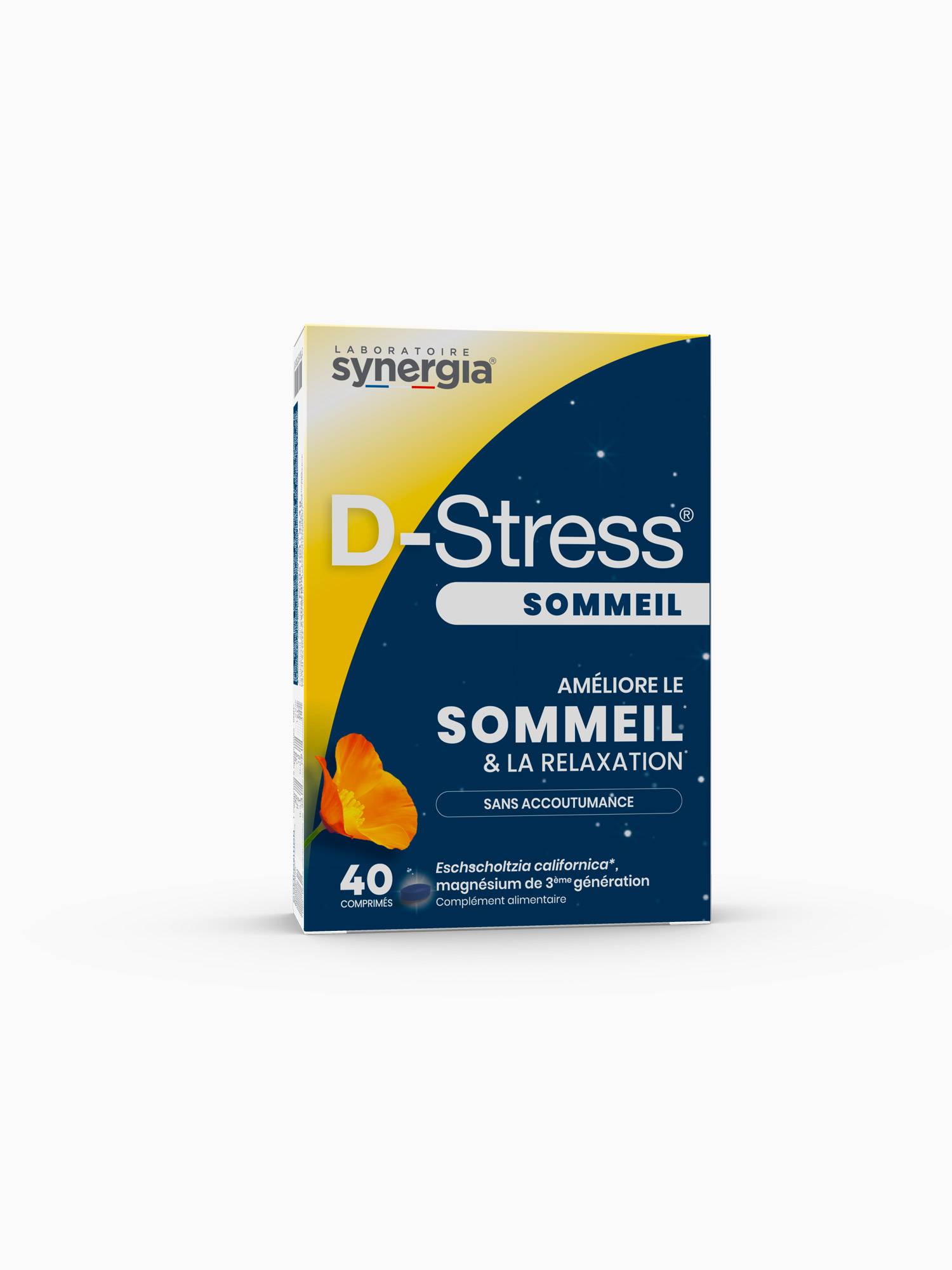
Discover D-Stress SLEEP, which improves sleep thanks to California poppy, and D-Stress DAY & NIGHT if you’re caught in the vicious cycle of stress ↔ poor sleep. Our D-Stress formulas contain third-generation magnesium glycerophosphate, a form that is highly absorbable and well-tolerated by the body. The recommended daily dose is listed on the packaging.
When should you seek medical advice for nighttime awakening?
While everyone experiences restless nights from time to time, chronic sleep disturbances should not be ignored. In fact, persistent nighttime awakenings may mask an underlying medical condition that requires a proper medical diagnosis.
Certain warning signs should prompt you to seek the advice of a healthcare professional:
- Frequent or prolonged awakenings more than three times a week for at least one month, with an impact on daily life (fatigue, irritability, drowsiness, difficulty concentrating).
- Associated physical symptoms (e.g., loud snoring, feelings of suffocation or pauses in breathing, the need to move your legs, night sweats, waking up with shortness of breath, palpitations, chest pain, or acid reflux) may indicate sleep apnea or cardiac, hormonal, or digestive disorders.
- Waking up accompanied by a loss of interest in usual activities, persistent sadness during the day, or even very dark thoughts may warrant a medical consultation to identify a possible depressive disorder.
If you continue to wake up at night, consult your doctor, who can refer you to a sleep specialist if necessary and order laboratory tests (blood sugar, thyroid hormones, ferritin, vitamin D) that can often help identify the cause of poor sleep.
Waking up at night – Frequently Asked Questions
Is it a problem to wake up every night at 3 a.m.?
Waking up in the middle of the night isn’t a problem in itself if it’s only for a short time and you fall back asleep easily. However, it becomes a problem if you stay awake for a long time, if this pattern persists for more than three months, or if it leads to significant fatigue, difficulty concentrating, or daytime sleepiness. If these regular awakenings are affecting your daily quality of life, it’s recommended that you see a doctor to identify the cause.
How long does it take for changes in sleep hygiene to have an effect on nighttime awakenings?
Although the first effects may appear after a few days, it generally takes between two and four weeks to see lasting benefits. The circadian rhythm and the body’s internal clock need time—and, above all, consistency—to readjust to new habits (fixed bedtimes and wake-up times, avoiding screens, lowering the room temperature). If no improvement occurs after a month, it’s best to consult a healthcare professional to explore other options.
Can you take melatonin if you wake up at 3 a.m.?
Regardless of its form, taking melatonin upon waking will have little effect. Melatonin is a hormone secreted in the late evening to prepare the body for sleep. It thus helps improve overall sleep quality. It is recommended to take a dietary supplement before bedtime—either an immediate-release formula to help you fall asleep at night or a sustained-release formula to help you stay asleep throughout the night.
Are nighttime awakenings at 3 a.m. more common at certain times of the year?
Yes, they often increase in the fall and winter. The lack of natural light disrupts melatonin secretion and throws off the body’s internal clock. Time changes also disrupt our internal rhythms. In addition, temperature fluctuations (an overly heated bedroom in winter or a heat wave in summer) disrupt the deep sleep phase, which gives way to lighter sleep around midnight, making it more likely to wake up around 3 a.m. Finally, periods of intense stress, such as the start of the school year, increase the production of cortisol, the wakefulness hormone.
Is there a link between waking up at 3 a.m. and magnesium deficiency?
Yes, there is a link. Magnesium plays a key role in regulating the nervous system and in the production of serotonin, a precursor to melatonin. A deficiency can lead to increased sensitivity to stress, persistent fatigue, muscle cramps, and sleep disturbances. Around 3 a.m., when sleep naturally becomes lighter, this lack of magnesium can cause micro-awakenings or an inability to fall back asleep peacefully. Getting enough magnesium through your diet (nuts, legumes, mineral water) or appropriate supplementation can help stabilize your sleep cycles.
Should you eat something if you wake up at 3 a.m. feeling hungry?
Ideally, it’s best to avoid eating so as not to restart digestion and get your body used to craving food at that hour. If hunger is truly preventing you from falling back asleep, opt for a very light snack low in fast-acting sugars, such as a handful of almonds or half a glass of warm milk. Refined carbohydrates can cause an insulin spike followed by a drop in blood sugar. To prevent this problem, be sure to eat a balanced dinner that includes whole-grain starchy foods and protein to avoid drops in blood sugar in the middle of the night.