
Our body has its own detoxification system, thanks to the liver as well as the intestines. This process allows for the continuous elimination of endogenous toxins (produced by the body) and exogenous toxins (from the environment).
However, due to digestive disorders or an unbalanced lifestyle, this system can become overwhelmed, causing toxins to accumulate and making digestion more difficult.
This article sheds light on intestinal detoxification: what exactly is it? Is it beneficial for everyone? What are the most effective methods?
What is a colon cleanse?
A colon and intestinal detox refers to a set of methods designed to promote the natural elimination of toxic substances accumulated in the intestines and to optimize digestive function. It does not involve “cleansing” the intestines of harmful substances on an ad hoc basis, but rather providing long-term support for the normal functioning of the body’s natural detoxification mechanisms.
The body’s detoxification mechanisms
The body has highly efficient detoxification mechanisms that identify, transform, and then eliminate harmful substances. These compounds can be endogenous—that is, produced by metabolism (ammonia, free radicals, spent hormones, pathogenic bacteria in the microbiota, etc.)—or exogenous, also known as xenobiotics (certain medications, alcohol, pollutants, or food additives)(1).
The liver and intestines are the key players in this detoxification process, but the kidneys, skin, lungs, and lymphatic system also play an important role.
The primary organ involved in detoxification is the liver, where specialized enzymes modify toxic molecules to make them more water-soluble and thus easier to eliminate—primarily through urine, bile, and stool.
In fact, some of these compounds are excreted by the kidneys in the urine, while others are excreted in bile, which transports them to the intestines. The colon then plays a crucial role: it is here that digestive enzymes—some of which have strong antioxidant properties—continue to break down certain molecules, and where the gut microbiota transforms or inactivates various compounds before they are eliminated.
Thanks to this highly organized system, the body efficiently eliminates a large portion of waste and unwanted substances while maintaining its internal balance.
When should you consider a gut detox?
Chronic exposure to environmental chemicals, pharmaceutical metabolites, or prolonged metabolic stress can overwhelm the body’s detoxification capabilities. People who are particularly exposed to these substances or who are under a great deal of stress may also want to consider a liver and gut detox.
In addition, damage to the intestinal barrier or an imbalance in the gut microbiota—both of which are essential for detoxification—can lead to digestive issues such as bloating, abdominal pain, constipation, or diarrhea. If you’re experiencing these symptoms, you may want to try a “detox.”
What can you expect from an intestinal detox?
By supporting the body’s natural mechanisms for eliminating harmful substances, a detox helps promote normal digestive function.
1) Promote Regular Bowel Movements
Gradually increasing your intake of fiber and water can improve the regularity of your bowel movements.
Insoluble fiber increases the volume of intestinal contents, while soluble fiber serves as a substrate for gut bacteria.
2) Reducing certain feelings of digestive discomfort
A diet richer in plant-based foods, combined with better hydration, can help reduce certain feelings of digestive heaviness.
3) Supporting the balance of the microbiome
The microbiome reacts quickly to dietary changes.
A study(2) showed that a diet rich in fermented foods gradually increased microbial diversity and reduced several inflammatory markers in healthy adults. A balanced microbiome also helps prevent digestive discomforts such as bloating, diarrhea, constipation, and abdominal pain.
9 Tips to help detoxify your gut
A gut detox helps eliminate toxins that have accumulated in the gut. It involves adopting habits that support healthy digestion.
To achieve this, an adequate intake of micronutrients, a healthy gut microbiome, and effective elimination are the three main factors.
1. Gradually Increase Fiber Intake
Dietary fiber is likely one of the most effective ways to support gut function. In fact, it promotes bowel movements and binds to some of the substances excreted in the gut, thereby limiting their reabsorption. Intake should be increased gradually and kept moderate to avoid digestive discomfort. Nutritional guidelines generally recommend an intake of about 25 to 30 g of fiber per day, yet a large portion of the population consumes significantly less.
Fiber helps to:
- increase stool bulk;
- support regular bowel movements;
- nourish the beneficial bacteria in the gut microbiome.
The best dietary sources of fiber are:
- vegetables;
- fruits;
- legumes;
- oatmeal;
- chia seeds;
- psyllium;
- whole grains.
2. Eat more fermented foods
Fermented foods are attracting growing interest in the scientific literature. These include:
- yogurt containing live cultures;
- kefir;
- sauerkraut;
- kombucha;
- kimchi;
- sourdough bread.
Regular consumption of fermented foods over several weeks may increase the diversity of the microbiome and reduce certain markers of inflammation.
3. Leveraging prebiotics and probiotics to balance the gut microbiome
The gut microbiome plays a role in fiber digestion, the production of short-chain fatty acids, immune function, and the maintenance of the intestinal barrier A balanced microbiome is thus fully capable of limiting the production or reabsorption of potentially harmful compounds. Conversely, an unbalanced microbiota contributes to the accumulation of toxins in the body(3).
- Prebiotics are specific types of fiber that serve as food for beneficial bacteria. They are found in particular in garlic, onions, leeks, asparagus, slightly unripe bananas, and chicory.
- Probiotics are bacteria (often lactobacilli and bifidobacteria) or yeasts that maintain the balance of the gut microbiota and strengthen the barrier. They also help reduce the activity of certain enzymes responsible for toxin formation(4).
4. Eat healthily
Repeated overeating—including meals that are particularly high in sugar, fat, or ultra-processed foods—can temporarily disrupt the balance of the gut microbiome and cause a feeling of digestive heaviness. Limiting exposure to alcohol and chemical sources—such as pesticides—as much as possible can also help detoxify the gut.
For the sake of your microbiome, it is therefore essential to eat a healthy, balanced diet. In addition, reducing your calorie intake by eating a little less helps boost your immune system and improve detoxification.
5. Reducing stress
The gut is in constant communication with the brain via the gut-brain axis.
Prolonged stress can affect intestinal motility, gut permeability, and the composition of the microbiota. A study conducted on 120 adults experiencing high levels of stress showed that taking probiotics and prebiotics targeting the microbiota could improve several parameters related to gut health(4).
In addition to taking probiotics, relaxation methods are therefore recommended to reduce stress levels: breathing techniques, physical exercise, meditation, etc.
6. Drink enough water
Water contributes to healthy bowel function. On the one hand, proper hydration promotes filtration by the kidneys and thus the elimination of toxins. On the other hand, it allows dietary fiber to work effectively.
In general, daily water requirements range from about 1.5 to 2 liters, depending on physical activity and weather conditions.
7. Exercise regularly
Physical activity naturally stimulates bowel motility and promotes blood circulation and lymphatic drainage. A lack of physical activity is therefore associated with slower bowel movements in some people(5).
Walking, swimming, cycling, and yoga are excellent options for supporting digestive comfort.
8. Have regular bowel movements
Having regular bowel movements prevents the reabsorption of toxins through the circulation of bile acids between the liver and the intestine. Consuming soluble dietary fiber—which is easily fermented by the gut microbiota—and insoluble fiber—which increases stool volume and accelerates intestinal transit—helps promote the normal elimination of toxins and stool.
9. Eat “detox foods”
Certain foods are particularly recommended for promoting digestive and intestinal well-being. Foods such as ginger, lemon, and broccoli, as well as herbs like mint, can also contribute to gut health.
Colon detox: What to think of popular methods?
Cleanses, detox programs, low-tox diets, detox supplements… What should we make of today’s popular methods that claim to “purify” the intestines?
Colonic Cleanses
A colonic cleanse, or colonic hydrotherapy, is a procedure designed to significantly accelerate the elimination of intestinal contents by introducing water into the intestines through the rectum. It can be performed at home using an enema bulb, but is most often performed with a specialized device in a doctor’s office.
Although it may be useful in cases of severe constipation or in specific medical contexts (for example, before certain digestive exams), its use is not without risk and its frequency must be strictly limited. In fact, it serves very little purpose in a healthy person. The intestines are there precisely to eliminate waste from the body; they are not meant to be “cleaned.”
Intestinal detoxification is a complex process: a simple enema “cleanses” the colon in the short term but does not address the root cause of the problem, which will recur a few weeks later. An approach combining diet and lifestyle is far more effective, as it significantly influences the balance of the microbiome, the integrity of the intestinal barrier, and the body’s natural elimination functions.
Fasting
Fasting is the subject of growing scientific interest. It involves complete abstinence from food, with the exception of clear liquids (water, juice, herbal teas), and is practiced for a period ranging from one day to one week, or even longer.
Some studies suggest that periods of dietary restriction may influence the microbiome and certain cellular mechanisms involved in the body’s renewal. However, results vary depending on the protocols and individual profiles.
The hypotoxic diet
The hypotoxic diet, like the Seignalet diet, is based on the elimination of foods and nutrients considered toxic, such as gluten (grains), processed foods or those high in saturated fatty acids (cheese, crème fraîche, pastries, etc.), and dairy products (lactose). While this strategy may promote a more diverse microbiome, there is no evidence that this diet provides any significant benefit for healthy individuals.
All scientific studies point to the same conclusion: no cleansing regimen, fast, or diet is considered effective for cleansing the gut; rather, they suggest that long-term improvement of the microbiome through diet and lifestyle promotes the gut’s natural detoxification mechanisms.
Dietary supplements
Once again, be wary of dietary supplements that promise to “cleanse” your intestines! Just like a healthy diet, supplementation should only aim to provide you with a beneficial amount of certain nutrients known for their positive effects on the microbiome, the intestinal barrier, and digestive disorders. The goal, therefore, is to support the normal functioning of your intestines’ detoxification mechanisms, not to cleanse their contents.
Opt for formulas based on well-documented active ingredients:
- Probiotics, which maintain the balance of the gut microbiota and strengthen its barrier function (they may be combined with prebiotics for enhanced effectiveness);
- Oregano supports good gut health.
- Caraway reduces bloating.
- Peppermint contributes to healthy digestion.
- The bromelain found in pineapple extract provides enzymatic activity.
- Milk thistle supports liver detoxification and protection.
- Ginger stimulates gastric activity.
- Vitamin B3 helps maintain the intestinal lining.
- Psyllium promotes regular bowel movements, nourishes the microbiota, improves stool consistency, and supports digestive comfort
Synergia’s “Intestinal Detox” Program
One in two French people suffers from digestive problems. Although taking probiotics is often the first instinct, introducing good bacteria without first eliminating the bad ones will have only a limited effect.
That’s why it’s recommended to follow a comprehensive program that addresses the gut as a whole: first, detoxify to start on a healthy foundation; then, repair the mucosal lining to strengthen the intestinal barrier; and finally, rebalance the microbiome to ensure the digestive system functions properly overall. Synergia offers you its complete protocol:
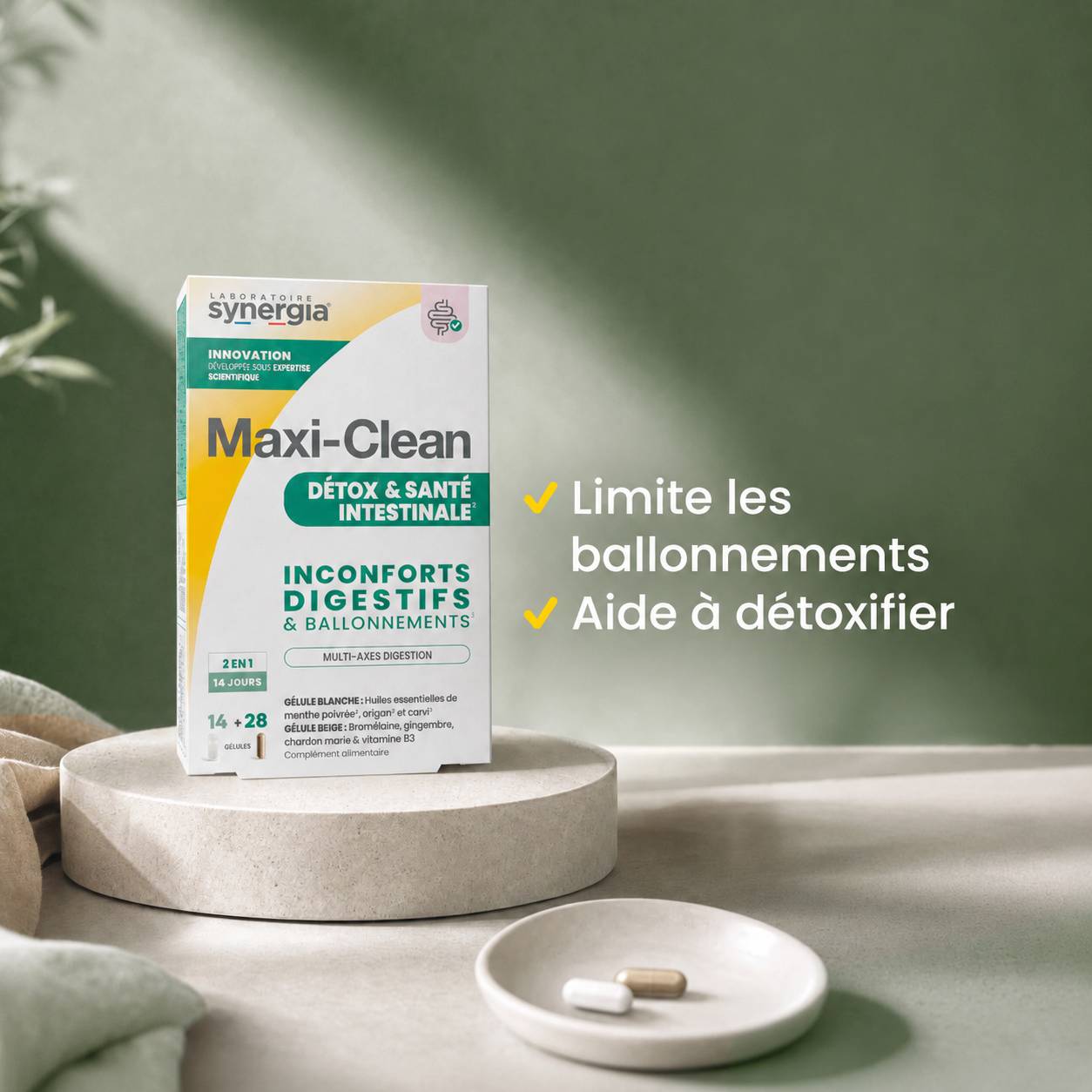
1) Cleanse your gut with Maxi-Clean DETOX & GUT HEALTH capsules: eliminate toxins and reduce digestive discomfort such as bloating and irregular bowel movements.
2) Repair your intestinal lining with Glutaform DIGESTIVE COMFORT packets: maintain a healthy digestive and immune balance.
3) Rebalance your gut microbiome with Maxi-Flore COMFORT+ packets: supports overall digestive system function and helps prevent recurrence.
To better understand this, imagine a farmer who wants to grow a new crop. He could simply plant his seeds and wait for them to sprout, but if his field is overrun with weeds, the yield will be much lower. To improve his yield, he’s best off weeding (Maxi-Clean), properly preparing the soil (Glutaform), and then sowing the seeds (Maxi-Flore CONFORT+), which will ensure the best conditions for his crop.
How do I know if I should do a liver or gut detox?
A gut detox is helpful for persistent digestive issues (bloating, gas, constipation, diarrhea, etc.), when probiotics alone aren’t enough. This is because residual toxins or pathogens in the gut can interfere with the action of probiotics.
Opt for a liver detox if you’re experiencing chronic fatigue, nausea, or a dull complexion, especially if you’ve just gone through a period of excess (rich meals, alcohol, tobacco, or medications).
In reality, these two organs work in tandem. The liver filters toxins and releases them into the gut via bile. It is therefore often wise to cleanse the gut before stimulating the liver to ensure proper elimination.
Common Mistakes During an Intestinal Detox
- Trying to go too fast: A sudden increase in fiber can cause more digestive discomfort (bloating, diarrhea, abdominal pain, etc.).
- Neglecting hydration: Fiber needs water to be fully effective.
- Relying solely on detox drinks: No single drink can “clean out” the gut on its own.
- Confusing gut detox with weight loss: The goal of a gut detox is to support digestive comfort and gut microbiota; it is not intended to cause weight loss.
Intestinal Detox – Frequently Asked Questions
How can you cleanse your intestines quickly?
There is no quick fix for achieving lasting gut cleansing. The most effective approach is to gradually increase your fiber intake, drink enough water, prioritize a plant-based diet, and take dietary supplements made from herbs and essential oils known for their benefits to digestion and gut health.
What foods should you prioritize for a colon detox?
Vegetables, fruits, legumes, whole grains, chia seeds, psyllium, and fermented foods are among the most beneficial options.
Are probiotics helpful for a gut detox?
Yes, probiotics help maintain a healthy gut microbiome, which supports colon detoxification.
How long does an intestinal detox last?
The effects of changing your lifestyle and eating habits generally take several days to several weeks to become noticeable. In addition to a healthy diet and lifestyle, Synergia’s Maxi-Clean Detox program is recommended for a 14-day period.
What should you drink to aid digestion?
Water remains the most important beverage, but lemon water, herbal teas, prune juice, and certain fermented beverages can also promote digestion and bowel regularity.
Intestinal detoxification is a natural process carried out by various organs and cells in the colon. Detox programs are not about eliminating toxins or “purging” the intestines, but rather about supporting these natural mechanisms by balancing the microbiome and maintaining a healthy intestinal barrier.
Did you know?
Over the course of a lifetime, the digestive system processes more than 25 metric tons of food, making it the body’s primary route of exposure to foreign substances and antigens(6).