

Bloating and a feeling of a distended abdomen are the most common gastrointestinal symptoms, affecting 19% of the population(1) and up to 47% according to some studies(4). They affect men and women of all ages.
Despite this high prevalence, these symptoms remain difficult for clinicians to treat due to the limited effectiveness of existing approaches(6), and are difficult for patients to cope with because of their significant impact on quality of life.
In this article, learn what causes bloating and a swollen stomach, and how to reduce the occurrence and impact of these symptoms on daily life.
Bloated stomach, abdominal bloating: What are we talking about?
A swollen stomach refers to abdominal distension—that is, an increase in the volume of the abdomen at the waistline—which can be perceived subjectively or measured objectively.
Intestinal bloating (or meteorism) refers to the sensation of excessive gas trapped in the abdomen(1).
A bloated stomach and intestinal bloating are symptoms that generally result from a digestive disorder; they often appear after meals and subside or disappear overnight(6).
Although the terms “bloated" and "swollen" stomach are often used interchangeably, they may not always be related!
Distinguishing between bloating, abdominal swelling, and gas
Abdominal swelling is not always accompanied by bloating. It can also be a sign of constipation, water retention, ascites, or pregnancy, for example. Conversely, bloating is not necessarily associated with visible abdominal distension; it may be perceived only subjectively.
Furthermore, bloating is often relieved by a bowel movement or passing gas, which is why “bloating” and “gas” are frequently confused—and it’s important to distinguish between them.
Signs of a swollen, bloated stomach
Bloating causes an unpleasant or even painful sensation of fullness or abdominal pressure. There may be “noises,” or borborygmi, caused by the movement of gas in the stomach or intestines. In 1 out of 2 cases, bloating is accompanied by abdominal swelling(4). The abdomen may also feel harder, often compared to that of a pregnant woman.
A bloated and distended abdomen is sometimes accompanied by other symptoms such as:
- Digestive issues (constipation/diarrhea)(2);
- Flatulence (gas)(2);
- Belching (burping)(5);
- Nausea and vomiting (5).
These symptoms may be occasional, occurring during times of indigestion, or chronic in people with underlying gastrointestinal conditions. It’s also worth noting that they are generally relieved by belching and passing gas, and aggravated by eating certain foods, stress, or wearing tight clothing, among other factors.
In general, a bloated stomach and bloating can have a significant impact on quality of life—partly due to the pain and other symptoms they often cause, and partly because of the visible discomfort, which is considered unattractive(3). Many affected individuals even report having had to reduce their daily activities(6).
Causes and factors
There are many possible causes of bloating and a distended abdomen, and not all of them have been fully elucidated. However, certain factors contribute to their onset, including being female, advancing age, high levels of stress, or somatization(1).
These symptoms may also be linked to functional gastrointestinal disorders (e.g., irritable bowel syndrome, aerophagia) or to organic diseases (e.g., celiac disease, pancreatic insufficiency, carbohydrate malabsorption, gastrointestinal motility disorders, small intestinal bacterial overgrowth, digestive or gynecological tumors, endocrine problems, etc.)(1, 7).
Here are the main mechanisms behind bloating:
Gas accumulation
Contrary to popular belief, bloating is not always related to excessive gas production (6). In most people affected, the amount of intestinal gas remains normal. The problem stems instead from the body’s poor management of gas, either due to an imbalance between the production and elimination of intestinal gas(4, 6)—it’s worth noting that gas comes primarily from air swallowed while eating, drinking, and talking, from digestive chemical reactions, and from bacterial fermentation in the colon, and is eliminated through belching, absorption into the bloodstream, and anal evacuation—or from a slowing of gas transit or a failure to evacuate (e.g., a defective rectal reflex), which can lead to prolonged retention of gas in the intestine and contribute to abdominal pain and bloating.
Diet
Certain foods high in FODMAPs—that is, those containing so-called “fermentable” carbohydrates or sugars—can nevertheless promote increased fermentation in the colon and increase gas production(4).
In general, lactose and fructose intolerance, fructan intake, consumption of sorbitol and other non-absorbable sugars, and gluten sensitivity are all dietary factors that contribute to bloating.
In addition, eating disorders can also lead to symptoms of gas and bloating, as observed in people with anorexia and bulimia(6-7).
An imbalance in the gut microbiome
The gut microbiota plays a central role in supporting the immune system and in digestion. In fact, the billions of microorganisms that make up the gut microbiota actively participate in the breakdown of certain dietary components not absorbed by the body—particularly fiber—through biochemical fermentation reactions. During this fermentation, gases are naturally produced (hydrogen, methane, carbon dioxide).
When the balance of the microbiota is disrupted (dysbiosis), fermentation can become excessive or proceed abnormally, leading to increased gas production and a sensation of bloating.
Visceral hypersensitivity
One of the main mechanisms involved is visceral hypersensitivity: some people perceive even low or normal levels of gas as excessive, leading to significant abdominal discomfort or pressure(7). This appears to particularly affect people who experience bloating without associated abdominal distension(3).
Abdominal-diaphragmatic reflex abnormalities
Bloating and abdominal distension may be related to poor coordination between the abdominal wall muscles and the diaphragm. In fact, the abdomen is able to adapt to changes in volume (food intake, bowel movements, urine, gas) thanks to the abdominal muscles and the diaphragm. Normally, when the volume of gas increases in the intestine, the abdominal muscles contract while the diaphragm relaxes, allowing the volume to be distributed without significantly altering the waist circumference. In some people, this reflex is disrupted: the abdominal muscles relax instead of contracting, and the diaphragm does not relax sufficiently (3, 7). This inappropriate response then leads to visible abdominal distension and a sensation of abdominal pressure, even in the presence of small amounts of gas.
Diagnosing bloating
The diagnosis of bloating begins with a series of questions, just as with any other reason for seeking medical care. The first step is to identify the symptoms experienced: bloating with or without abdominal swelling, bloating accompanied by pain, flatulence, belching, constipation, diarrhea, nausea, weight loss, anemia, etc.)(3).
In cases of bloating alone, the first recommendation is to follow simple lifestyle and dietary guidelines. If there are associated symptoms, a blood test, an endoscopy, a gastric emptying scintigraphy, and/or a colonoscopy may be indicated (3, 6).
What can you do about a swollen stomach and bloating?
A swollen stomach and bloating can be particularly uncomfortable and affect your quality of life. The goal of treatment is therefore to reduce the frequency and severity of symptoms. The approach involves first following simple lifestyle and dietary guidelines, supplemented if necessary by medication.
1. Basic Principles
Here are some general tips to aid digestion(5):
- Eat at regular times and chew your food thoroughly;
- Avoid foods that are too fatty (fried foods, processed meats, fatty sauces) and processed foods;
- Limit carbonated beverages and “airy” products (meringues, bread, chewing gum, etc.);
- Avoid alcohol and tobacco;
- Drink about 1.5 liters of water per day (more depending on your activity level) in small, frequent amounts;
- Avoid lying down, especially after meals;
- Do not wear clothing that is too tight around the abdomen;
- Minimize sources of stress.
2. The low-FODMAP diet
Diet plays a crucial role in triggering bloating. Dietary changes aim to reduce intestinal fermentation and, consequently, gas production.
Adopt a low-FODMAP diet (Fermentable Oligosaccharides, Disaccharides, Monosaccharides, and Polyols). FODMAPs are carbohydrates, or sugars (e.g., lactose, fructose, glucose, fiber…), which are absorbed little or not at all by the intestine and tend to ferment rapidly due to the action of bacteria in the colon. Here is an overview of foods that contribute to bloating(2):
- Milk (especially skim milk) and dairy products (e.g., dessert creams, cottage cheese);
- Certain fruits (e.g., apples, pears, dried fruits, and nuts);
- Certain vegetables (e.g., artichokes, cabbage, leeks, garlic, onions);
- Whole grains and starchy foods (e.g., pasta, rice, potatoes, bread);
- Sweets, sugary drinks, and processed foods.
It may be recommended to eliminate foods that cause discomfort one at a time for a few days to test for a potential intolerance (starting with dairy products, then fruit juices and sodas, then fiber, etc.)(6).
For a more comprehensive list of foods to avoid and personalized recommendations, consult a dietitian.
3. Dietary Supplements
- Look for probiotics that can relieve bloating by reducing gas production (7). Certain yogurts and dietary supplements containing probiotics can help restore digestive comfort.
- Activated vegetable charcoal is often used to absorb gas (3).
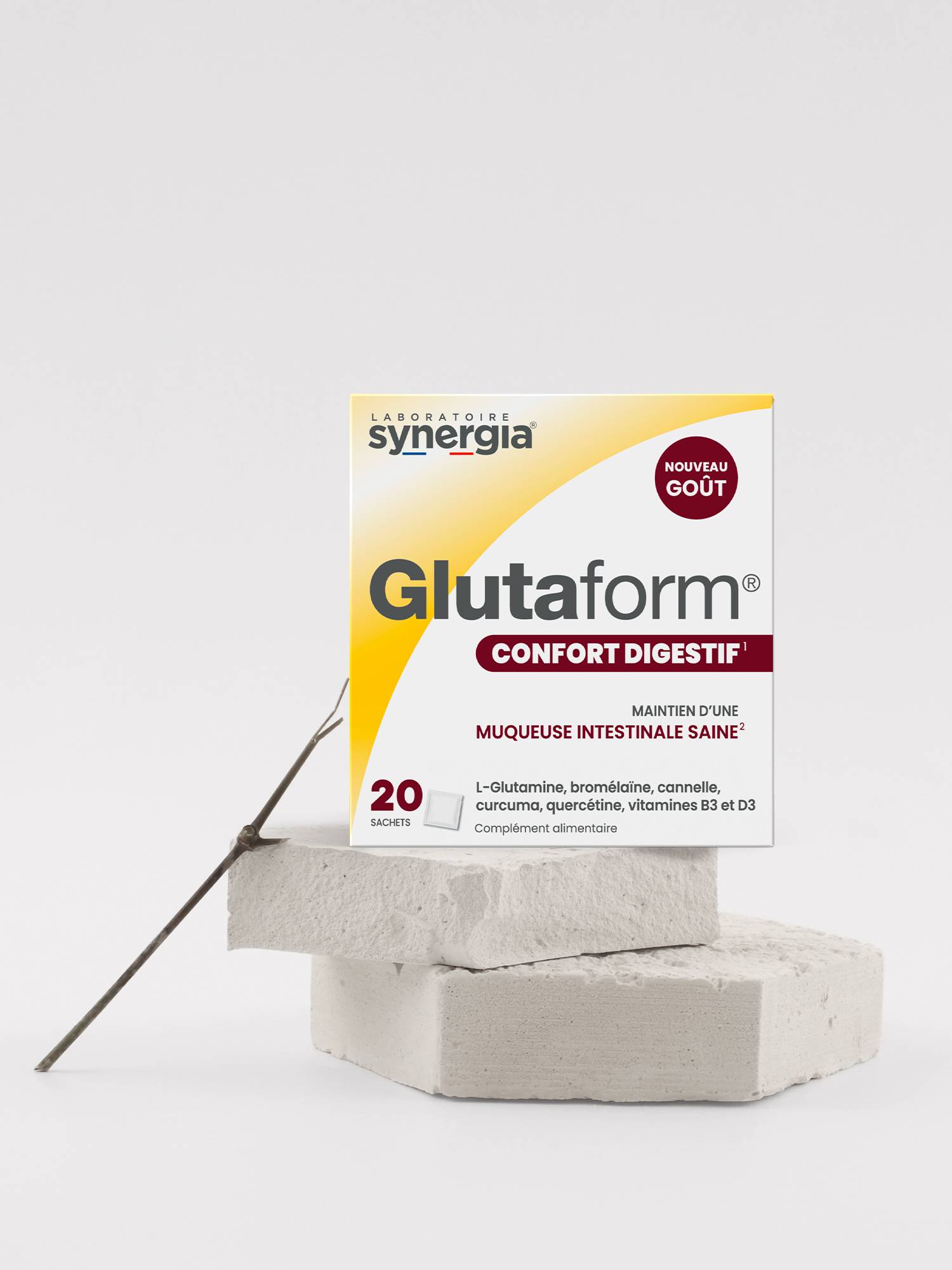
- Try dietary supplements specially formulated to reduce bloating and digestive discomfort. Discover Synergia Laboratories’ innovative MAXI-CLEAN and its 2-in-1 action on gut health and detoxification, thanks to its synergy of herbs, enzymes, and vitamin B3. For a comprehensive digestive regimen, follow up with GLUTAFORM to strengthen the intestinal lining, then with the probiotics in Maxi-Flore DIGESTIVE COMFORT to rebalance your gut flora.
4. Physical activity
Physical activity helps speed up bowel movements and the release of gas(2). Regular exercise is recommended. For example, at least 20 minutes of walking per day(5) or 30 minutes of any sport 3 to 5 times a week(3).
5. Complementary therapies
Certain relaxation techniques may help reduce digestive symptoms and anxiety, which is a contributing factor to a bloated and distended abdomen. Hypnosis has been studied extensively and appears to help regulate transit time and visceral sensitivity, demonstrating a positive effect on bloating(3, 4). Other approaches are also mentioned, such as sophrology, yoga, and meditation (2).
In addition, treatments targeting the abdomen—such as visceral osteopathy and the use of a hot water bottle—may be useful in alleviating discomfort, but do not appear to have a direct effect on bloating (3).
6. Pharmacological approach
The pharmacological management of bloating and abdominal distension relies on several therapeutic classes that target different mechanisms.
- Antispasmodics are often used to improve tolerance to intestinal gas and thereby reduce discomfort and bloating (2, 7).
- Neuromodulators may also be recommended to affect visceral sensitivity.
- Prokinetics, used in herbal medicine (peppermint) or as pharmaceuticals, improve bowel motility and gas elimination(7).
- Antiflatulents (e.g., activated charcoal, simethicone) relieve excess gas(3)
- Bowel movement regulators may be prescribed for constipation (laxatives) or associated diarrhea (antidiarrheals)(2). Finally, probiotics, as mentioned above, and, in some cases, antibiotics can affect the gut microbiota(7).
- Antidepressants can modulate pain perception(2).
Bloated stomach: Frequently Asked Questions
Is acupuncture effective against bloating?
Acupuncture has not been shown to have significant effects on bloating(3).
What is the difference between bloating and flatulence?
Bloating refers to a sensation of a swollen stomach, often linked to a buildup of gas. Flatulence, on the other hand, refers to the release of gas through the anus. It is therefore possible to experience bloating without passing much gas, and vice versa.
Which essential oils help with bloating?
Certain essential oils are traditionally used for their digestive and antispasmodic effects, including peppermint, caraway, oregano, fennel, and tropical basil. They can help reduce intestinal spasms and promote digestive comfort. They should always be used with caution, diluted, and for a short period of time, as they are potent and may sometimes be contraindicated (pregnancy, children, digestive disorders).
What should you eat if you’re constipated and bloated?
If you’re constipated and bloated, it’s recommended to focus on foods rich in gentle, easily digestible fiber: cooked fruits, cooked vegetables, fruit compotes, oatmeal, and soaked chia seeds. It’s also important to drink enough water and get some physical activity. Highly fermentable foods (cabbage, excessive amounts of legumes) should be avoided.
Is bloating related to stress?
Yes, stress can significantly influence bloating through the brain-gut axis. It can alter digestive motility, slow down or disrupt bowel movements, and increase intestinal sensitivity. It can also lead to aerophagia (swallowing air). Techniques such as breathing exercises, relaxation, meditation, or sophrology can help reduce these symptoms.
Why do I have a bloated, swollen stomach during my period?
During menstruation, hormonal changes can slow down bowel movements, leading to prolonged retention of food and gas in the intestines, which causes that sensation of a bloated, swollen, and hard stomach—and sometimes also bowel issues (constipation or diarrhea).